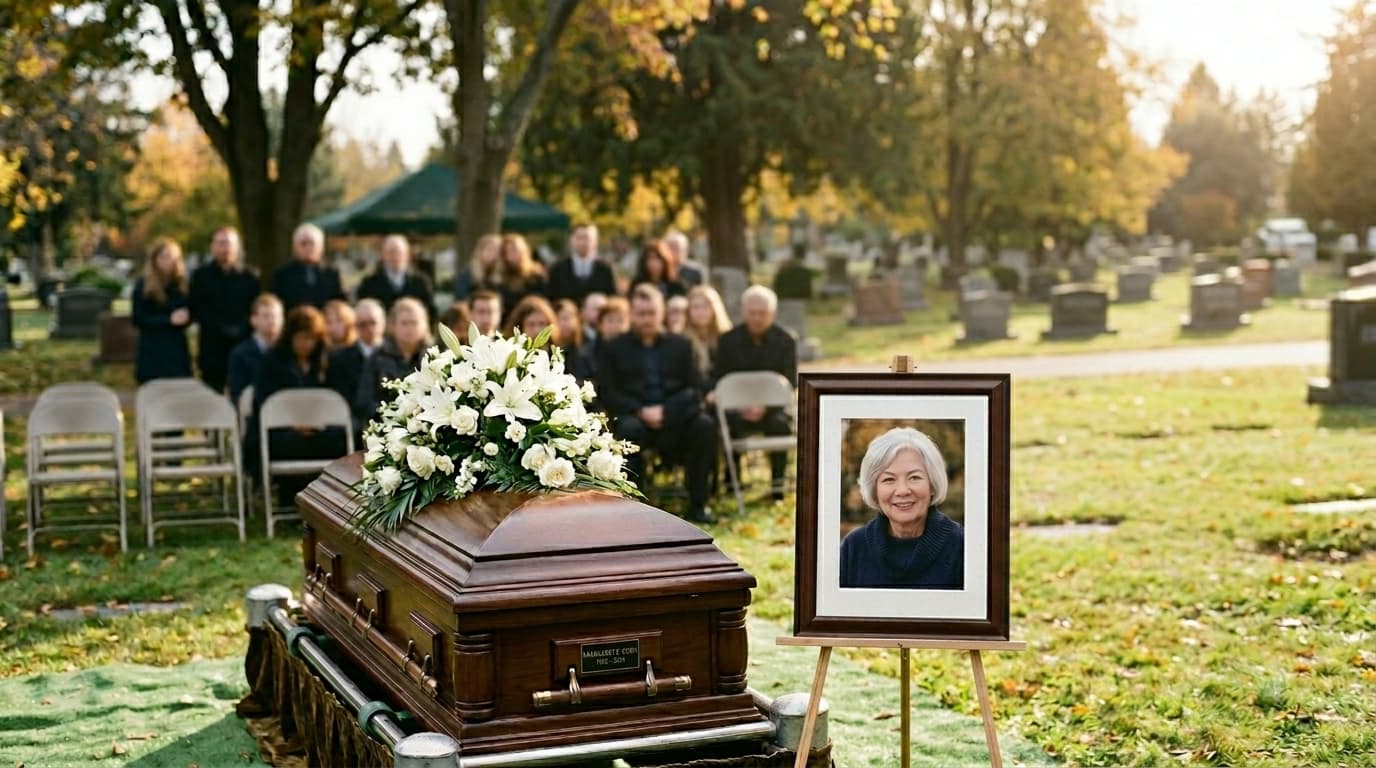
Music for Your Farewell: How to Choose the Right Funeral Music
Over 85% of people want personalized music at their funeral, yet most never tell anyone which songs to play. Here is how to choose with intention.
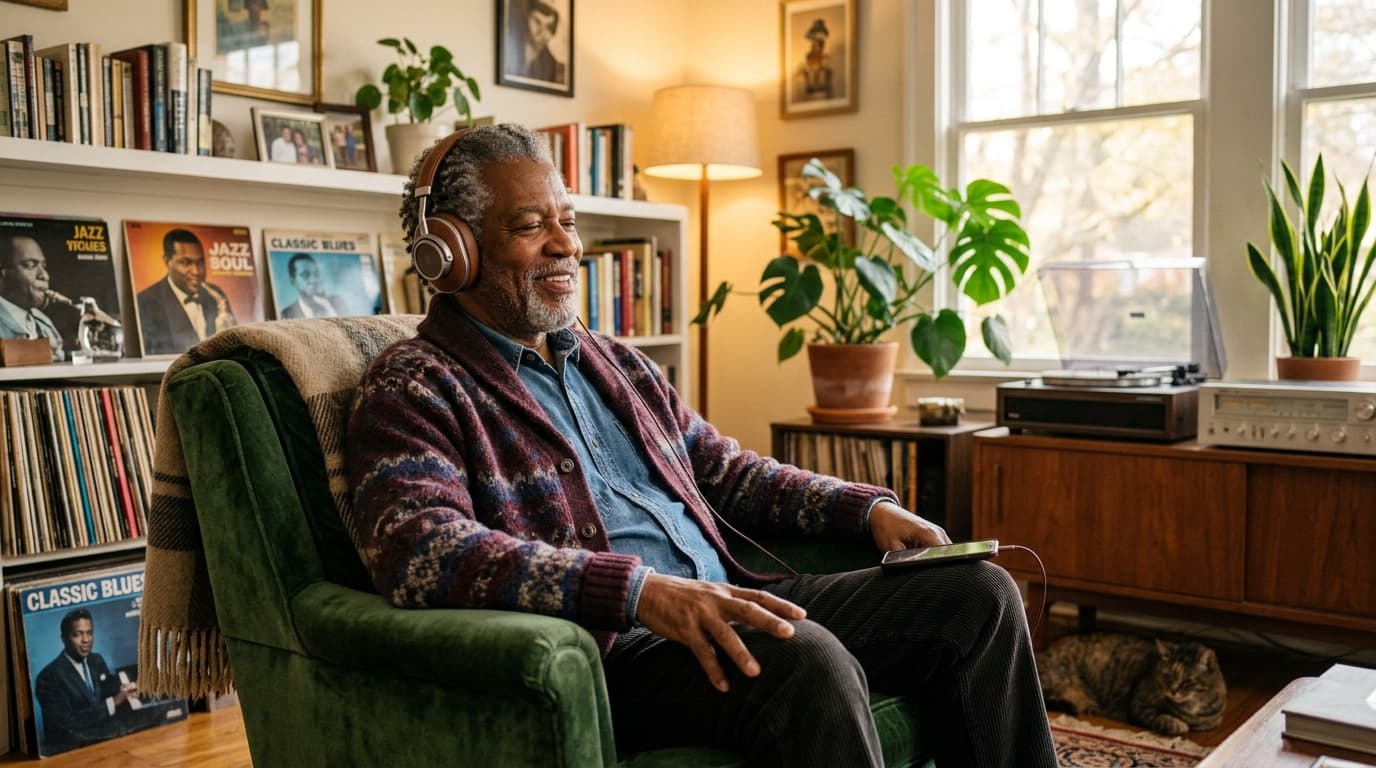
There is something about music that goes where words cannot. A melody can hold an entire relationship — a first dance, a road trip, a quiet Sunday morning. So when it comes to choosing funeral music, you are not just picking songs. You are choosing the soundtrack to your story, the last gift of sound you will leave behind.
According to a 2023 survey by the National Funeral Directors Association, over 85% of people say they want some form of personalized music at their funeral service. Yet most of us never tell anyone which songs we would want played. We leave that decision to grieving family members who are already overwhelmed, guessing in a fog of emotion what we might have chosen.
You do not have to leave it to chance.
Your sonic legacy: why farewell songs matter more than you think
Think about the songs that have followed you through life. The one that played at your wedding. The one your mother hummed while cooking. The anthem you screamed at concerts in your twenties. The lullaby you sang to your children before bed.
These are not just songs. They are emotional bookmarks, and they have the power to transport the people you love back to the moments you shared. That is what ceremony music does at its best — it does not just fill silence, it creates a space where grief and gratitude can coexist.
There is real reason behind this. A familiar song can act as a "container" for feelings that are otherwise too big to hold — giving mourners permission to cry, to remember, and eventually to smile. AARP notes that personalizing a service, including its music, is one of the most meaningful things you can do both for yourself and for the people who will gather to remember you.
"I used the same song from my wedding. It felt like the perfect way to close the circle." — When I Go user
Choosing songs that reflect a life, not just a mood
Before you think about where each song goes, it helps to think about what you want the music to say. The most moving funeral playlists are not lists of "appropriate" songs — they are portraits. They tell the people in the room something true about the person they came to honor.
A useful way to begin is to map the chapters of your life and ask which sound belongs to each. The decade you fell in love. The music your family played on long drives. The artist you returned to in hard times. The song you would put on, even now, when you needed to feel like yourself. You are not assembling a greatest-hits record; you are leaving clues to who you were.
It also helps to let a few of your choices be unexpected. The song that makes your oldest friend laugh out loud — the one that is a little too loud, a little too you — often does more emotional work than the most polished hymn.
Key moments for music in a funeral service
A funeral or memorial service typically has several moments where funeral service songs can shape the emotional arc. Thinking of the service as a journey — arrival, reflection, farewell, and gathering — makes it easier to choose music that carries people from one feeling to the next.
The processional (entrance)
This is when guests arrive or when the casket enters. The music here sets the tone and tells the room how to feel before a single word is spoken. Most people choose something reflective and slow-building rather than a song with a hard beat or sudden lyrics, because the goal is to settle a restless, anxious room into stillness. Instrumental pieces work beautifully for this reason — there are no words to interpret, only a feeling to share. Barber's Adagio for Strings, Debussy's Clair de Lune, or a gentle acoustic guitar arrangement give people something to breathe with as they take their seats.
During the service (reflection)
This is the emotional center of the service, often placed after a eulogy or reading, and it is where a song does its deepest work. Here you can choose music with meaning, even lyrics, because people are seated, attentive, and ready to feel. Familiar songs land hardest in this slot: Amazing Grace, Ave Maria, What a Wonderful World by Louis Armstrong, or Somewhere Over the Rainbow by Israel Kamakawiwo'ole. But it could just as easily be a Beatles song or a jazz standard that meant something to you personally. This is the point where the service stops being a ceremony and becomes a shared act of remembering.
The recessional (exit)
The closing moment — when people leave the service. This is often where people choose something uplifting, even joyful, because of where it sits: it is the last thing people hear before they walk back into the world, and it shapes the feeling they carry out the door. A song that says: remember me with a smile. Think My Way by Frank Sinatra, Here Comes the Sun, or something unexpected that captures your spirit. Choosing release rather than sorrow here is a quiet gift to your mourners — it lets the day end on gratitude.
The gathering after
If there is a reception or wake, background music can keep the warmth going, and this is where the rules loosen completely. A curated funeral playlist here can feel like you are still hosting, still welcoming people into your world — your favorite albums, the music from your kitchen, the songs that made you dance. Many families find this is where laughter finally returns.
Personal taste versus what mourners need
One of the quiet tensions in choosing farewell music is that the service is, in a sense, for two audiences at once. It is yours — a final expression of who you are. But it is also a gift to the people sitting in that room, raw with loss.
Most of the time these line up perfectly. But occasionally a song you love deeply might be too painful, too private, or too jarring for the people grieving you — a track tied to a difficult chapter, an explicit lyric that lands strangely in a chapel, a piece so personal no one else will understand it. The aim is not to censor your taste but to make sure the music opens people up rather than shutting them out.
A simple test helps: for each song, ask whether it will help the people you love feel something and share something. And when in doubt, you can do both — keep your most personal song for the recessional or the gathering, where the mood is gentler, and reserve the central, shared moments for songs your people will recognize and grieve along with.
Religious, cultural, and secular considerations
Faith and culture shape not only which songs feel right but what is permitted, so it is worth thinking about early.
If faith is part of your life, traditional hymns or chants may feel like the truest expression of your farewell. Catholic services often include On Eagle's Wings or Be Not Afraid. Jewish funerals frequently feature El Malei Rachamim, the memorial prayer chanted by a cantor. Hindu ceremonies may center on bhajans or devotional chants. Islamic funerals traditionally do not include music at all, focusing instead on Qur'anic recitation — a reminder that "music" is not a universal expectation, and honoring that absence can be its own form of respect.
Many religious venues also distinguish between sacred and secular music. Some churches permit only liturgical music during the service itself, while welcoming personal, secular farewell songs at the reception or graveside. This is less an obstacle than a natural division: the sacred carries the ceremony, the personal carries the celebration. You can honor tradition while still leaving room for the songs that were unmistakably you — they simply find their place at a different moment in the day.
If religion is not part of your life, that freedom is yours too. A wholly secular service can be every bit as moving, anchored by the music that actually formed you rather than by inherited hymns.
Live music versus recorded: what to consider
One decision worth thinking about is whether you want live or recorded music. A live performance — a friend on guitar, a choir, a string quartet — brings an irreplaceable human presence. The slight imperfection of a real voice in a real room often touches people more than any recording.
However, recorded music gives you precision: that exact version of a song, that specific artist's voice, the arrangement you fell in love with. You do not have to worry about someone being too overcome to play, a guitar string breaking, or a venue not supporting a full band. For songs tied to a particular recording — the original artist, the specific tempo, that one unrepeatable performance — recorded is almost always the right call.
Some people choose a mix: a live hymn for the religious portion, where a congregation singing together is the whole point, and recorded farewell songs for the personal ones, where the exact track matters. There is no wrong answer — only what fits your service and your people.
A practical note if you go the live route: ask whoever will perform well in advance and be gentle about it, because grief can make even a willing friend unable to get through a song — keep a recorded version cued as a backup. And if you choose recorded music, check that the venue's sound system can actually play it well; a beautiful song through a tinny speaker loses much of its power.
Working with your venue, celebrant, and funeral director
Music does not happen in a vacuum — it happens in a building, run by people, on a timeline. Bringing the venue and the person leading the service into your plan early prevents painful surprises on the day.
A few things are worth confirming. Ask about any restrictions on song choice, particularly in a place of worship with rules about sacred versus secular music. Confirm how music will be played — whether there is a sound system, who will press play, and in what format files are needed (some venues want them in advance rather than a phone handed over in the moment). And decide who is responsible for cueing the recessional, which is easy to forget in the emotion of the day.
There is also a quieter consideration: public performance licensing. Playing recorded commercial music at a ceremony can fall under licensing rules in some venues, and many funeral homes hold the appropriate licenses precisely so families do not have to think about it. Your funeral director can confirm what is covered — worth a single question rather than an assumption.
How to choose: practical tips for building your funeral playlist
Choosing ceremony music does not need to happen in one sitting. Here are some ways to start:
Start with feeling, not genre. Do you want people to cry, to smile, to feel peaceful? Do you want the mood to shift from sorrow to celebration? Let the emotional arc guide your choices, then find the songs that serve it.
Match each song to a moment. Once you know the feeling you want, slot songs into the entrance, the reflection, and the exit. Placement is as important as the song itself.
Think about your people. Which songs will your partner recognize? Which one will make your best friend laugh through tears? Music is a bridge — choose songs that connect your story to the people hearing them.
Honor your traditions, then add yourself. Begin with whatever faith or cultural music feels right, then make room for at least one song that is unmistakably you. The combination is what makes a service feel like a real person and not a template.
Do not overthink it. Three to five songs is plenty for most services. You are not curating a concert — you are choosing moments.
Write a note about why. If you can, leave a sentence or two about why each song matters to you, and where in the service you imagine it playing. That context transforms a funeral playlist from a list of tracks into a love letter — and it gives whoever organizes your service the confidence that they are honoring your real wishes, not guessing.
Write it down somewhere it will be found. A playlist that lives only in your head, or buried in an old account no one can access, helps no one. Document your choices in a place your trusted people can reach when the time comes — ideally alongside the rest of your end-of-life wishes.
When I Go and Spotify: your playlist, preserved
When I Go connects directly with Spotify so you can search, preview, and save the exact funeral service songs you want. You build your farewell playlist the same way you would build any other playlist — except this one has a purpose that goes beyond your own listening. You can preview each track to confirm it is the right version, organize songs by the moment they belong to, and add a note about why each one matters.
Your choices are stored securely in your plan, ready for the people you trust to access when the time comes. No guessing, no scrambling through old playlists, no family disagreements about what you would have wanted. Everything sits beside the rest of your wishes, so the people organizing your service have a clear, complete picture instead of fragments.
Because the truth is, choosing your funeral music is not morbid. It is one of the most personal, creative, and generous things you can do. It says: I thought about you. I wanted to leave you something beautiful.
Start building your farewell playlist on When I Go today — it only takes a few minutes, and your future self (and your loved ones) will be grateful you did.
This article is for informational purposes only. For specific guidance about music licensing, venue policies, or ceremony planning, consult your funeral director or celebrant.