
What Hindu Funerals Can Teach Us About Saying Goodbye
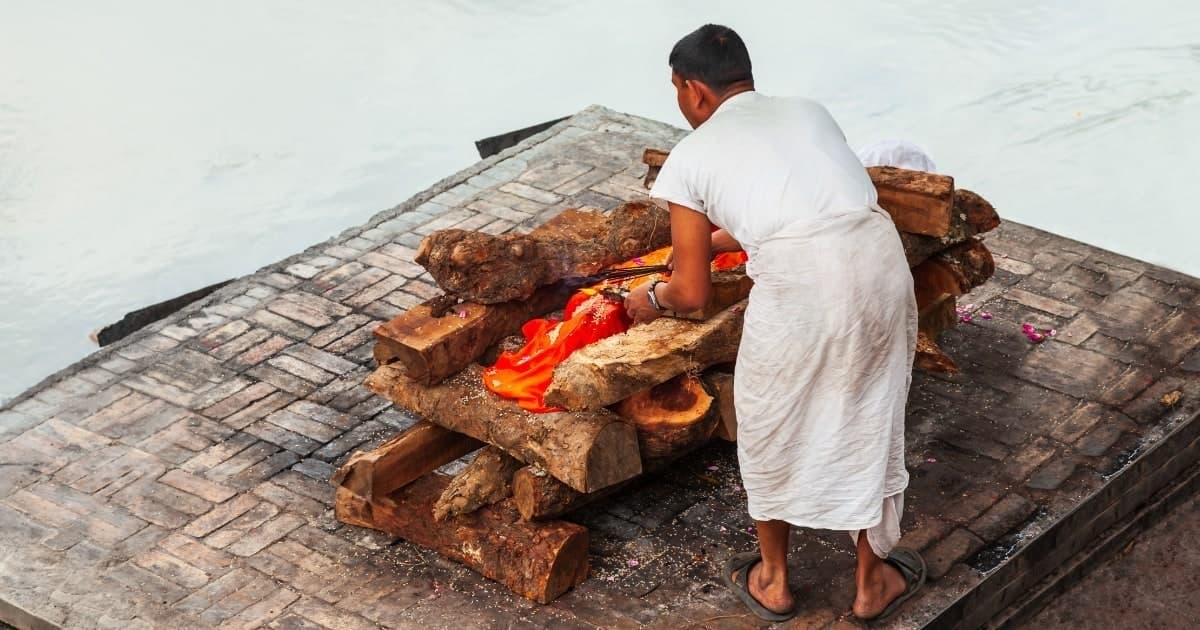
Most of us don't think much about funerals until we have to. And when that moment comes, we often find ourselves defaulting to whatever feels familiar: a standard service, a generic order of events, a ceremony that technically ticks the boxes but doesn't quite feel like the person it's meant to honor.
What if it didn't have to be that way?
Hindu funeral traditions, refined over thousands of years, offer something genuinely rare: a framework where every element carries intention. Every gesture has meaning. Every ritual is an act of love. You don't need to be Hindu or even religious to be moved by that, or to draw from it when imagining a service that truly reflects a life.
Here are some of the most beautiful ideas from Hindu tradition, and how you might make them your own.
1. Treat the Body as Sacred — One Last Time
In Hindu tradition, the body is washed and anointed by close family members shortly after death. It is an intimate, unhurried act, a final expression of care for someone you loved.
In many Western funerals, this role is handed entirely to professionals. There's nothing wrong with that. But there's also something worth considering: what would it mean to participate more directly in preparing a loved one for farewell?
To borrow: Talk with your funeral director about whether family members can be involved in washing, dressing, or adorning the body. For those who are pre-planning, consider leaving instructions about what you'd like to wear, or what flowers or items you'd want placed with you. These small choices make the ceremony feel unmistakably personal.
2. Light a Flame — and Keep It Burning
A diya — a small oil lamp — is lit near the body and kept burning throughout the Hindu mourning period. It is a symbol of the soul's continued presence, a quiet light in the darkness of grief.
Flame has always carried meaning across cultures. There's a reason candlelight vigils move us, or why we instinctively light candles in memory of someone we've lost.
To borrow: Incorporate sustained, intentional light into your service. A candle kept burning at a memorial table, a lantern carried in procession, or a moment where every attendee lights a small flame from a central one. These gestures are simple, powerful, and universal. For outdoor services, floating candles on water carry an extraordinary quiet beauty.
3. Give People Something to Do With Their Hands
Hindu funerals are participatory. Family members carry the body, recite prayers, make offerings, perform rituals. Grief can be paralyzing and having a meaningful physical role can be quietly healing.
Compare that to many modern services, where mourners sit in rows and watch. There is nothing wrong with stillness. But activity and ritual can be deeply comforting too.
To borrow: Build participation into the service. Invite guests to write a message on a card placed with the deceased. Pass around a bowl of flower petals for each person to scatter. Ask people to bring a single flower and add it, one by one, to the casket or a central display. Let the act of gathering become the act of honoring.
4. Return the Body to Something Larger
One of the most profound elements of Hindu tradition is asthi visarjan — the immersion of ashes into a sacred body of water. The River Ganges is the ideal, but any meaningful water will do. The symbolism is beautiful: the body, which came from the earth, is returned to it. The individual dissolves back into something infinite.
You don't need a sacred river to capture this idea.
To borrow: Consider what "return" means for the person you're honoring. Scatter ashes at a place they loved: a mountain, a coastline, a favorite park. Plant a memorial tree. Choose a biodegradable urn. These choices say something specific about who a person was and what they valued, and they give mourners a sense of the life continuing in some form, rather than simply ending.
5. Extend the Mourning — and Make It Communal
Hindu tradition sets aside 13 days of mourning, during which the community gathers, supports, and collectively grieves. Friends bring food. People come and sit with the family. The period has structure, and that structure helps.
Grief, research consistently confirms, is not an event, it's a process. Yet most Western funerals compress everything into a single day, and mourners are expected to "return to normal" almost immediately.
To borrow: Plan something for the days and weeks after the service, not just the day of. A gathering at one month, where people share memories. A meal on the anniversary. A standing invitation for friends to visit. The mourning period doesn't need a name or a number, it just needs permission to exist.
6. Let the Service Reflect a Philosophy, Not Just a Biography
Perhaps the most quietly radical thing about a Hindu funeral is that it isn't just about the person who died, it's about what their life and death mean. The rituals are grounded in a coherent worldview: the soul continues, love persists, the cycle goes on.
You don't need to share that worldview to want the same thing for your own service: a ceremony that says something true and meaningful about how you understood your time here.
To borrow: When planning a future service, ask the deeper question: what do I actually believe about life, death, and what matters? Let that belief shape the ceremony. If you find meaning in nature, let that be present. If you believe in the power of community, make the service communal. If you want to be remembered with laughter, say so. A service rooted in genuine philosophy, whatever that philosophy is, will always feel more alive than one assembled from defaults.
The Real Takeaway
Hindu funeral traditions have endured for thousands of years because they work - not just spiritually, but humanly. They give the grieving something to do, something to believe, and something to hold onto. That is a gift that belongs to all of us, whatever our background.
The more you explore these traditions, the more you may find yourself drawn into the deeper question behind each one: What do I actually want a farewell to feel like? Flame or water, ritual or stillness, community or intimacy. There are no wrong answers, only more honest ones.
So keep exploring. Borrow freely and thoughtfully. Let curiosity lead you toward a ceremony that is genuinely, unmistakably yours.