
What Irish Wake Traditions Can Teach Us About Grieving Together
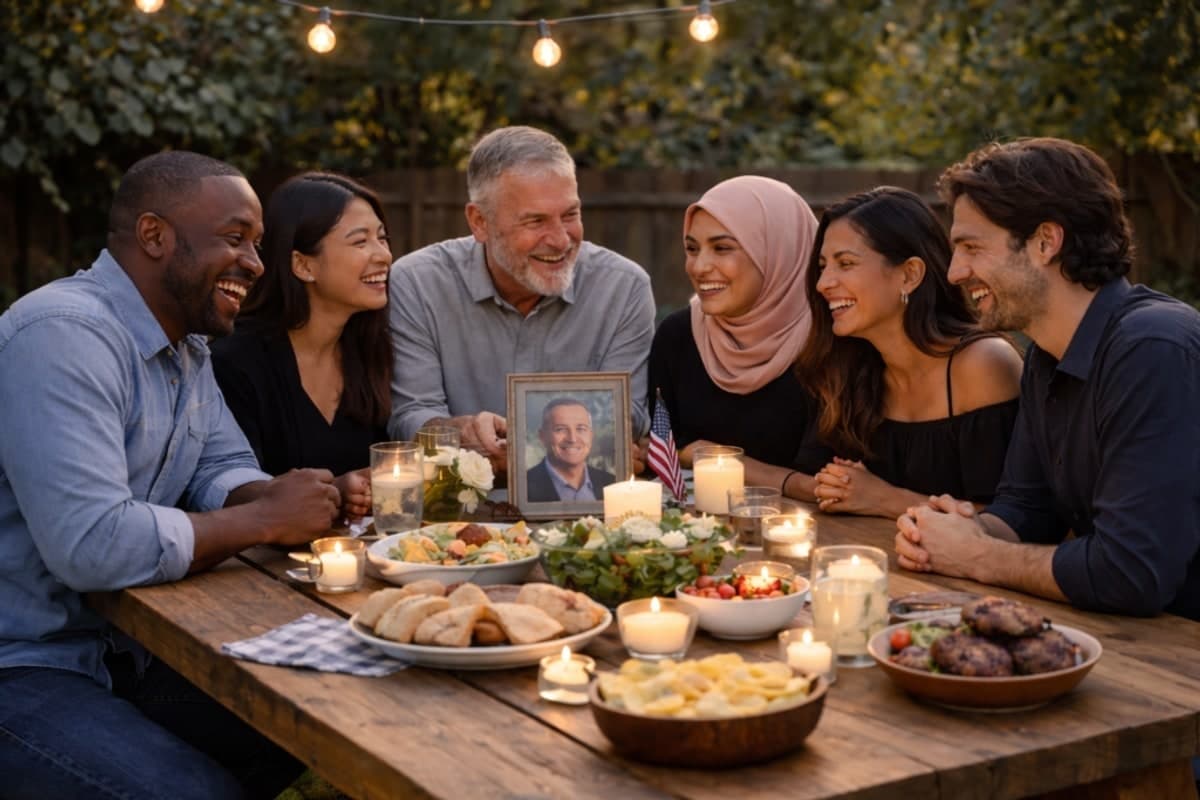
Most of us inherit a funeral script that keeps grief polite — quiet voices, restrained tears, a service followed by a brief reception and a quick return to normal life. We mean well. We protect ourselves. But sometimes protection becomes isolation, and the people who need each other most leave the room without ever fully arriving together.
What if a farewell could make room for the whole truth of a person — including laughter?
Irish wake traditions, shaped over centuries of rural community and Catholic practice, offer something disarmingly human: a gathering that blends prayer and song, whiskey and storytelling, silence and sudden humor. You don't need to be Irish or Catholic to recognize the gift in that — or to borrow from it when imagining a service that feels like a life, not a template.
Here are some of the most beautiful ideas from Irish wake culture, and how you might make them your own.
1. Keep the Gathering Open — and Unhurried
Traditional wakes often lasted through the night. Neighbors came and went. There was no rush to compress emotion into an hour. Presence mattered more than punctuality.
Modern services frequently run on tight schedules — understandable logistically, but emotionally constraining.
To borrow: Build buffer time into your plan. A longer viewing, an open house, a second informal gathering the night before or after the service. Tell loved ones you want people to linger. Grief rarely respects agendas; hospitality can at least respect grief.
2. Let Humor Sit Beside Sorrow Without Guilt
Irish wakes are famous for stories that make people laugh until they cry — sometimes in the same breath. That isn't disrespect. It's fidelity to how real humans live: ridiculous, tender, contradictory, unforgettable.
Many eulogies aim for uniform solemnity. Some lives were defined by wit.
To borrow: Explicitly invite humor in your plan. Name the stories you'd love retold. Give permission: "If you make them laugh, you'll honor me." A room that allows laughter often holds more honest grief than a room that forbids it.
3. Use Music as Community Language
Song at Irish wakes — ballads, hymns, pub tunes — is participation, not performance. Everyone may join. Music gives voice when individual speeches fail.
Recorded tracks and solo vocalists have their place. But communal singing changes the room.
To borrow: Choose songs people know well enough to sing along. Include music that reflects the person's taste, not only ceremonial defaults. For pre-planners, list a few sing-along candidates and explain why each matters. Shared voice reduces the loneliness of loss.
4. Share Food and Drink as Acts of Solidarity
Tea, sandwiches, whiskey, cake — wakes feed the living while honoring the dead. Neighbors bring dishes. The kitchen becomes a center of gravity. Care is practical before it is philosophical.
Funeral receptions sometimes feel transactional — eat quickly, leave quietly.
To borrow: Treat refreshments as part of the ritual, not an afterthought. Serve the person's favorites. Encourage potluck contributions with story cards: "I brought this because…" When pre-planning, note dietary preferences and symbolic foods. Nourishment is one of the oldest forms of love.
5. Welcome the Community, Not Only the Inner Circle
Irish wakes historically included neighbors, acquaintances, extended networks — the whole village, in a sense. Grief was social infrastructure, not private burden.
Contemporary funerals sometimes shrink attendance to manage logistics or emotional exposure.
To borrow: Consider who beyond immediate family might need to mourn — colleagues, friends from different life chapters, community members touched by the person. Create space for them: an open memorial hour, an online tribute wall, a public note in your plan welcoming those who loved you from afar. Lives ripple wider than guest lists suggest.
6. Tell Stories in Layers, Not Only from the Pulpit
At wakes, stories emerge organically — in corners, over cups of tea, in bursts across the room. Narrative is distributed, not centralized.
A single eulogy cannot carry every memory.
To borrow: Structure time for open storytelling — a memory microphone, a prompt board ("Tell us about the time…"), a recorded audio guestbook. When pre-planning, suggest questions you'd love answered: "What did I teach you?" "When did I make you laugh hardest?" Collective narrative builds a fuller portrait than any one speaker can.
The Real Takeaway
Irish wake traditions endure because they treat grief as something communities do together — loudly, quietly, over time, with tea and song and imperfect honesty.
The deeper question they raise is worth asking: What if a farewell felt less like a performance and more like a homecoming — a place where the whole truth of a person, including joy, could be held in one room?
So keep exploring. Borrow freely and thoughtfully. Let curiosity lead you toward a gathering that feels genuinely, unmistakably human.